
Jiu Jitsu Uniform Guide: Choose, Fit, and Care for Your Gi
The gi question often arrives before the first class does. You're standing outside an academy with a new belt, a water bottle, and a browser full of uniforms that look almost identical. A parent may be doing the same thing for a child, wondering whether the jacket should feel loose, whether the trousers will shrink, and whether a white gi is the only acceptable choice.
A jiu jitsu uniform, usually called a gi, doesn't need to be confusing. You need to understand what each part does, how gi and no-gi training differ, how proportions affect fit, and how to wash the uniform so it stays comfortable and hygienic. Competition rules matter, but everyday training at a community academy such as Locals Zetland or Locals Maroubra usually calls for a practical, well-fitting gi rather than a tournament specification sheet.
Walking Into Your First Training Session
A first class can feel like a small logistical test. You've read that you may need a gi, a belt, a rash guard, and perhaps a mouthguard, but you're still unsure what belongs in the bag and what can wait until later.
At a community academy, the first priority is turning up ready to learn. A clean uniform that allows you to move is more useful than an expensive gi chosen for its branding. If you're a parent, you'll also want something your child can put on without wrestling with stiff fabric, complicated fasteners, or trousers that trail across the mats.
Start with the essentials
A traditional gi includes a jacket, trousers, and belt. The jacket and trousers should be made for grappling, not substituted with ordinary clothing, because training partners will grip, pull, and use the fabric while practising controlled techniques.
You can usually begin by asking the academy what it expects for an introductory class. Some beginners may be able to borrow a gi for an initial session, which gives you a chance to experience the fit before buying. If the class is no-gi, you'll generally need a rash guard and grappling shorts instead.
Coach's advice: Choose equipment that removes distractions. A gi that pinches, drags, or comes apart will occupy your attention when you should be listening to instruction.
This guide keeps tournament rules in proportion. They're useful when you're buying carefully or considering competition, but most new students first need a uniform that fits their body, survives regular washing, and feels suitable for the academy environment. The following sections take you from the parts of the gi to the choices that affect comfort, durability, etiquette, and cost.
What a Jiu Jitsu Uniform Actually Is
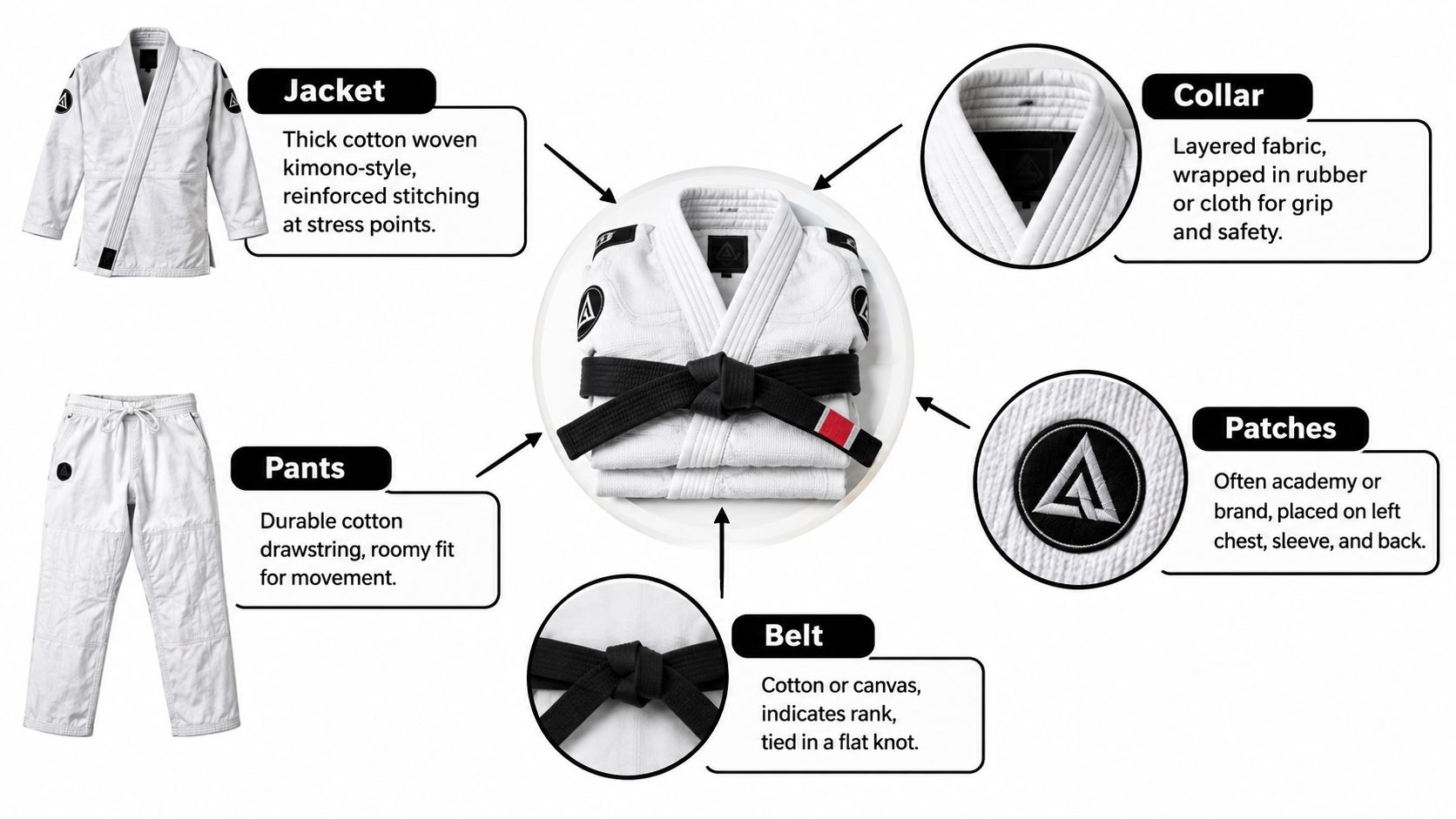
A gi, or dogi, is the traditional training uniform used in Brazilian jiu jitsu. It's built to be gripped and pulled repeatedly, so it should feel more like a sturdy work shirt than a loose pyjama top. The cut gives both people enough fabric to practise controls, escapes, sweeps, and submissions without restricting normal movement.
The jacket is the main training surface
The jacket is made from woven cotton or a cotton-like fabric. Its lapel is the thick front section that folds across the chest. Think of it as a built-in handle. Your training partner may use the lapel to practise a grip, while you learn to defend that grip, clear it, or use your own grips to create space.
A competition-legal uniform must use fabric that isn't so thick or hard that it prevents an opponent from gripping it, as described in the IBJJF uniform requirements. That rule reflects an everyday training reality. The weave and hand-feel affect friction, sleeve control, and how easily grips break during a scramble.
The sleeves should end near the wrists rather than bunching far up the forearms. Cuffs add structure at the ends, while reinforced stitching at high-stress points helps the jacket cope with repeated pulling.
The trousers and belt complete the system
Gi trousers are roomy enough for hip movement, guard work, and technical stand-ups. They normally close with a drawstring, elastic waist, or a combination of both. Reinforced knees matter because students spend a great deal of time kneeling, posting, framing, and moving across the mat.
The belt is woven and indicates rank. It should be tied securely in a flat knot so it doesn't loosen every time you sit, shrimp, or stand. A belt isn't just decoration. It's part of the academy's etiquette and gives the uniform a clear finishing point.
Cotton suits gi training because it's comfortable against the skin and handles the physical demands of grappling. Reinforced seams support longevity, while a loose but controlled cut gives the attacker and defender enough freedom to move. Your gi shouldn't feel like armour, but it shouldn't feel delicate either.
Gi Training and No-Gi Training Compared
Gi and no-gi are two training paths within Brazilian jiu jitsu. Neither is a lesser version of the other. The clothing changes the grips available, the pace of exchanges, and the equipment you need to bring.
In gi training, you can grip the jacket, sleeves, lapel, and trousers. Those grips create friction and give you more handles to manage. Exchanges may feel more methodical because students spend time building a grip, breaking a grip, and using the fabric to control posture.
No-gi training removes most fabric grips. Students generally wear a rash guard and grappling shorts, with movement shifting towards body-to-body control, wrestling-style transitions, and faster scrambles. The absence of sleeves and lapels changes how you control distance and prevent escapes.
Aspect | Gi Training | No-Gi Training |
|---|---|---|
Main clothing | Woven jacket, trousers, and belt | Rash guard and grappling shorts |
Available grips | Sleeves, lapels, trousers, and jacket | Wrists, arms, head, body, and legs |
Training feel | Deliberate grip fighting and positional control | Faster transitions and body-to-body movement |
Suits students who enjoy | Tradition, technical detail, and the ritual of the belt | Wrestling-influenced movement, athletic scrambles, and cross-training |
What to buy | Gi, belt, and suitable underlayer | Rash guard and grappling shorts |
You don't need to choose permanently on day one. Community academies commonly introduce students to both formats, allowing beginners to learn which movement style they enjoy. If you're preparing for no-gi classes, the Locals guide to jiu jitsu rash guards explains why the rash guard matters beyond appearance. It helps reduce skin friction and stays close to the body during movement.
The choice affects your first purchase. A gi student needs to think about weave, stiffness, sleeve length, and care. A no-gi student needs clothing that stays secure, allows movement, and meets the academy's expectations.
Weaves, Weights, and Patches Explained
A beginner at a community academy usually needs a gi that feels comfortable, survives regular washing, and dries within a sensible timeframe. Competition specifications matter if you plan to enter an event, but daily training at Locals Zetland or Locals Maroubra rarely requires tournament-grade fabric. Start by matching the uniform to your routine.
GSM means grams per square metre. A higher GSM usually means denser, heavier fabric, much like choosing a thicker work shirt instead of a lightweight summer one. Construction, stitching, and finishing also affect how a gi feels. A commonly referenced range for modern competition gis is about 380 to 650 GSM, according to this competition gi weight guide.
Weave Type | Typical GSM | Durability | Best For |
|---|---|---|---|
Single weave | Roughly 350–450 GSM | Lighter feel with practical everyday strength | Students who value mobility and straightforward training wear |
Gold weave | Roughly 500–550 GSM | Dense feel and strong resistance to pulling | Students who prefer a more substantial jacket |
Pearl weave | Often around 450 GSM | Good balance of durability and movement | Regular training and competition-oriented use |
These ranges are useful buying benchmarks, not fixed industry categories. Brands construct each weave differently, so inspect the stitching, collar stiffness, trouser fabric, and return policy before deciding. A 450 GSM pearl weave may feel quite different from another gi with the same label.
Match the fabric to your routine
Heavier weaves can resist tearing and help collars and sleeves keep their shape during repeated gripping. Lighter constructions generally allow freer movement and dry faster. That can suit Sydney's warm training conditions, especially for students who wash their gi after every session.
One Australian competition-legal gi guide describes a jacket using 450 GSM pearl weave with 10 oz ripstop cotton trousers, a practical example of balancing durability and mobility. Ripstop trousers often feel light while resisting tears. Cotton twill usually offers a familiar, breathable feel and dependable friction against the mat.
Treat patches as a rule, not decoration
Academy and brand patches belong only where your academy or event permits them. Competition organisations may restrict patch size, position, and content, and embroidery can also be limited. A gi may have an accepted colour and suitable fit yet still require alterations before inspection if a patch sits in a prohibited area.
For ordinary classes, follow your academy's clothing policy. Ask a coach before sewing anything permanently onto a new jacket, particularly if you may compete later. White, royal blue, and black are solid colours commonly accepted under Australian guidance that closely follows IBJJF measurements, as outlined by competition-legal gi guidance for Australia.
Finding the Right Fit for Adults and Kids
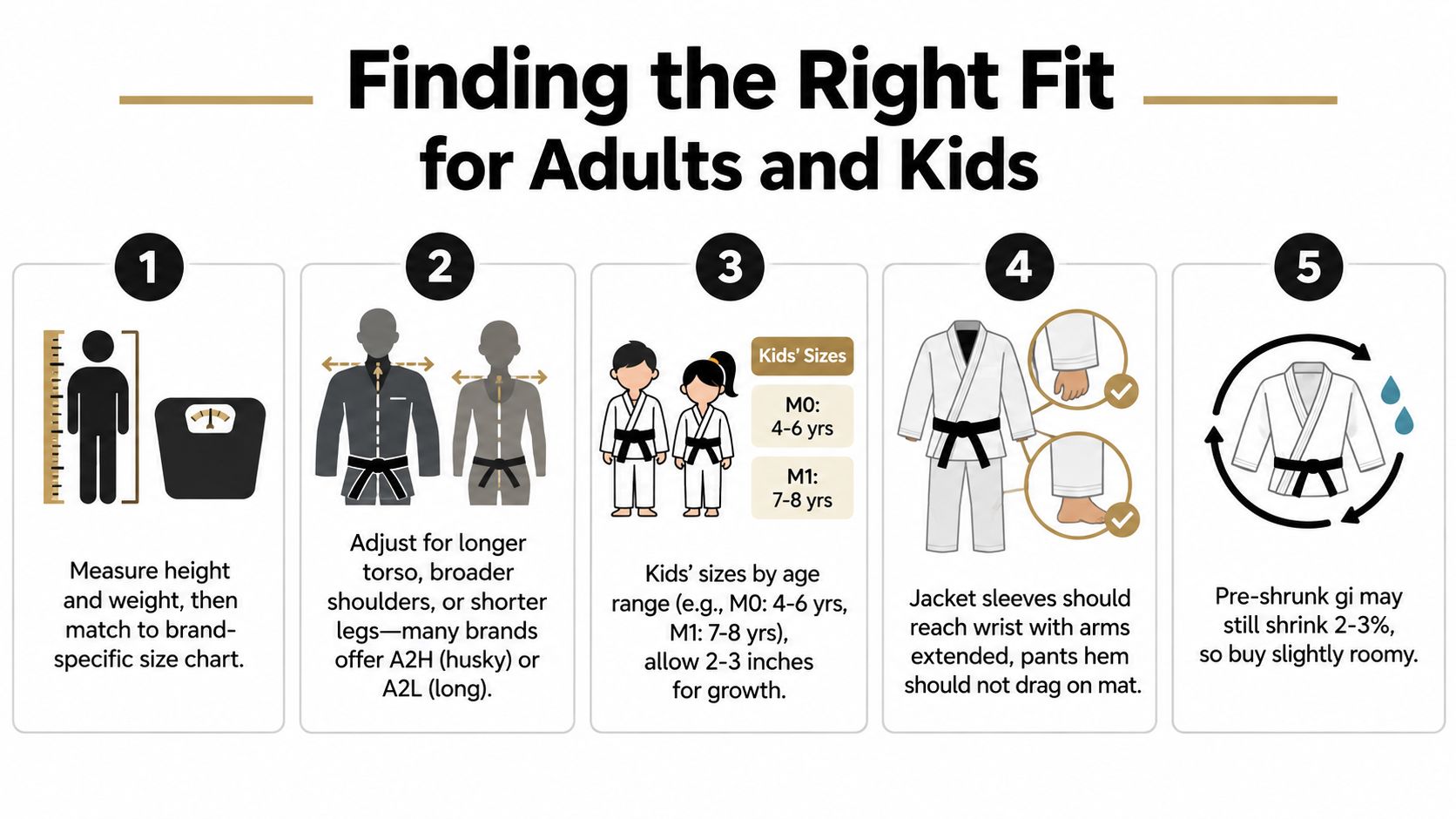
A size label is only a starting point. Two gis marked with the same size can fit differently through the chest, sleeves, waist, and trousers, so match the manufacturer's chart first and then adjust for your proportions.
Measure height and weight, but also consider shoulder width, torso length, wingspan, waist, and leg length. Someone with a long torso may need more jacket length without needing wider trousers. Someone with broad shoulders may need extra room through the chest while keeping the cuffs close to the wrists.
Use the fit checks that matter on the mat
Try the jacket with your arms extended. The sleeves should sit close to the wrist, not stop high on the forearm or cover the hands. Check the trousers while standing and kneeling. The hem shouldn't drag across the mat or sit far above the ankle.
Australian sizing guidance recommends checking sleeve length, chest, waist, wingspan, and shrinkage rather than relying on one size label, as explained in this Australian BJJ gi size guide. The same guidance notes that a non-pre-shrunk gi can shrink 2 to 4% after washing, so fabric treatment matters before you choose between an exact fit and a slightly roomier one.
For competition, the objective checks are strict. Sleeves must finish no more than 2 cm from the wrist with the arms extended, and trousers must finish no more than 2 cm above the ankle bone, according to the IBJJF legal gi measurement guide. Those measurements also give everyday students a useful reference, even when they aren't competing.
Kids need room, not excess fabric
Children grow quickly, but buying an adult gi too early usually creates a poor training experience. Oversized sleeves can catch on hands and equipment, while trousers that pool around the ankles can trip a child during movement drills.
Choose a kids' cut with reinforced knees and enough room for growth without allowing the cuffs to interfere with footwork. Parents comparing options can use the children's BJJ gi guide from Locals Zetland as a practical checklist, then confirm the academy's preferred size and colour.
Fit check: If the student has to roll sleeves or trousers to move safely, the gi is too large for current training, regardless of how quickly the child may grow.
Wash according to the manufacturer's instructions before judging the final fit. The first wash can reveal whether the uniform has been pre-shrunk and whether the trousers or sleeves need exchanging.
Washing, Drying, and Making Your Gi Last
A clean gi is part of training safety. Sweat left in a damp uniform creates an unpleasant environment for you and your training partners, so don't leave the gi bundled in a closed bag after class.
Start with a simple routine:
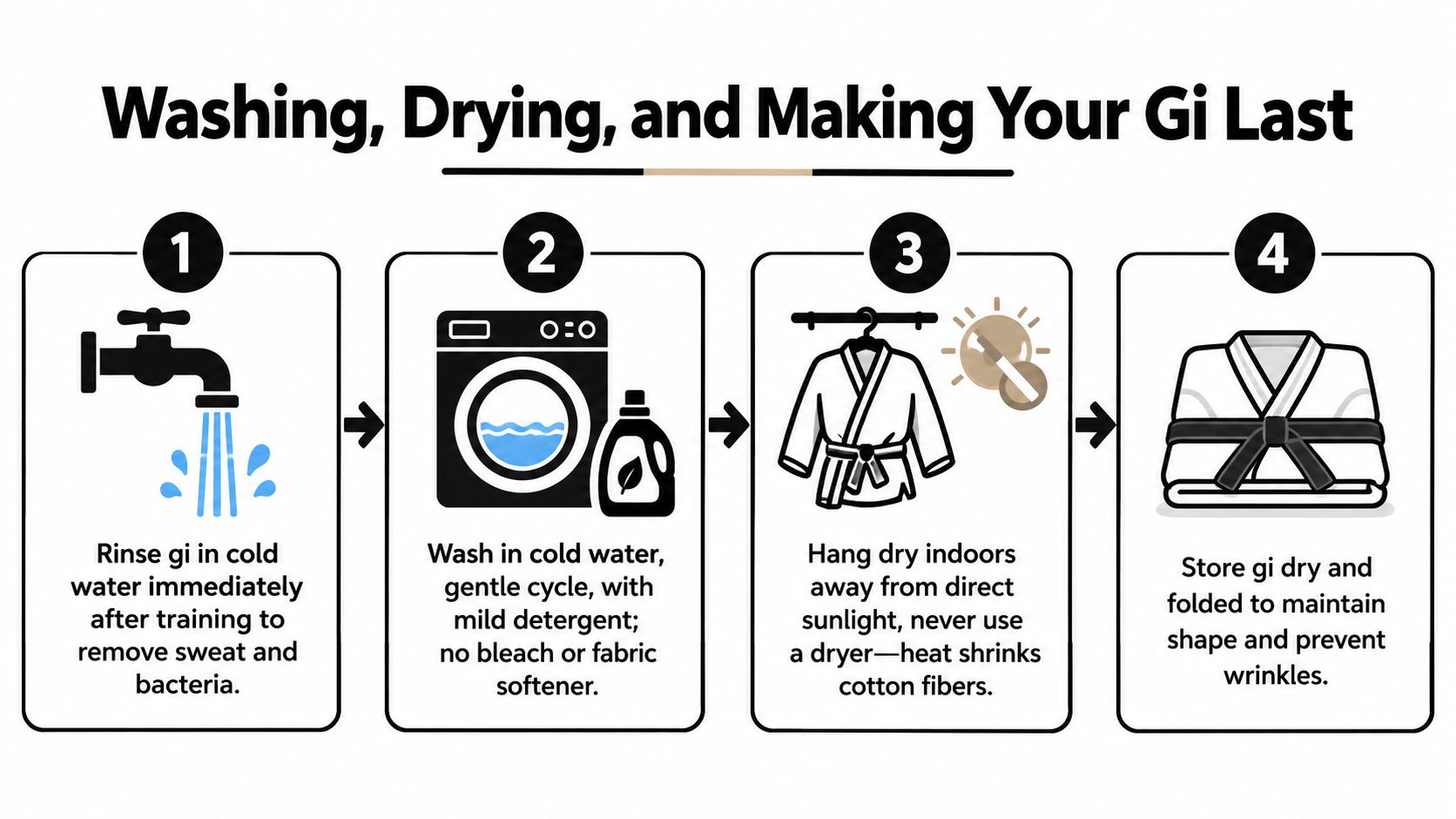
Rinse promptly. Rinse the gi in cold water after training if you can't wash it immediately. This removes sweat and reduces the chance of persistent odours.
Wash gently. Use cold water, a gentle cycle, and mild detergent. Skip fabric softener because it can affect the fabric's feel and performance.
Dry with care. Hang the gi in the shade or indoors with good airflow. Direct heat can accelerate shrinkage and weaken cotton fibres.
Store it dry. Fold the uniform only once it's completely dry. A damp gi in a closed bag is asking for trouble.
Blood and mat grime need prompt attention. Use a suitable enzyme-based cleaner that's safe for the gi's colour, test it on an unseen area, and follow the garment instructions. Avoid harsh treatment that can weaken stitching or fade patches.
The belt deserves the same hygiene consideration as the rest of the uniform. Some students follow a tradition of washing it rarely, while others wash it regularly. Your academy may have its own view, but a belt that smells or carries visible grime should be cleaned rather than treated as untouchable.
For practical sewing guidance, this resource on how to wash your makes can help you think through fabric care, gentle washing, and repair habits. Small repairs are easier before a seam opens fully. A loose stitch, frayed cuff, or torn knee can often be reinforced by a tailor or someone comfortable with heavy cotton.
Use this video as a visual reminder of the basic care process:
A well-maintained gi stays comfortable and gives you a better chance of getting full value from the purchase. Don't use a dryer because it's convenient if the care label warns against heat.
Academy Etiquette and What to Wear to First Class
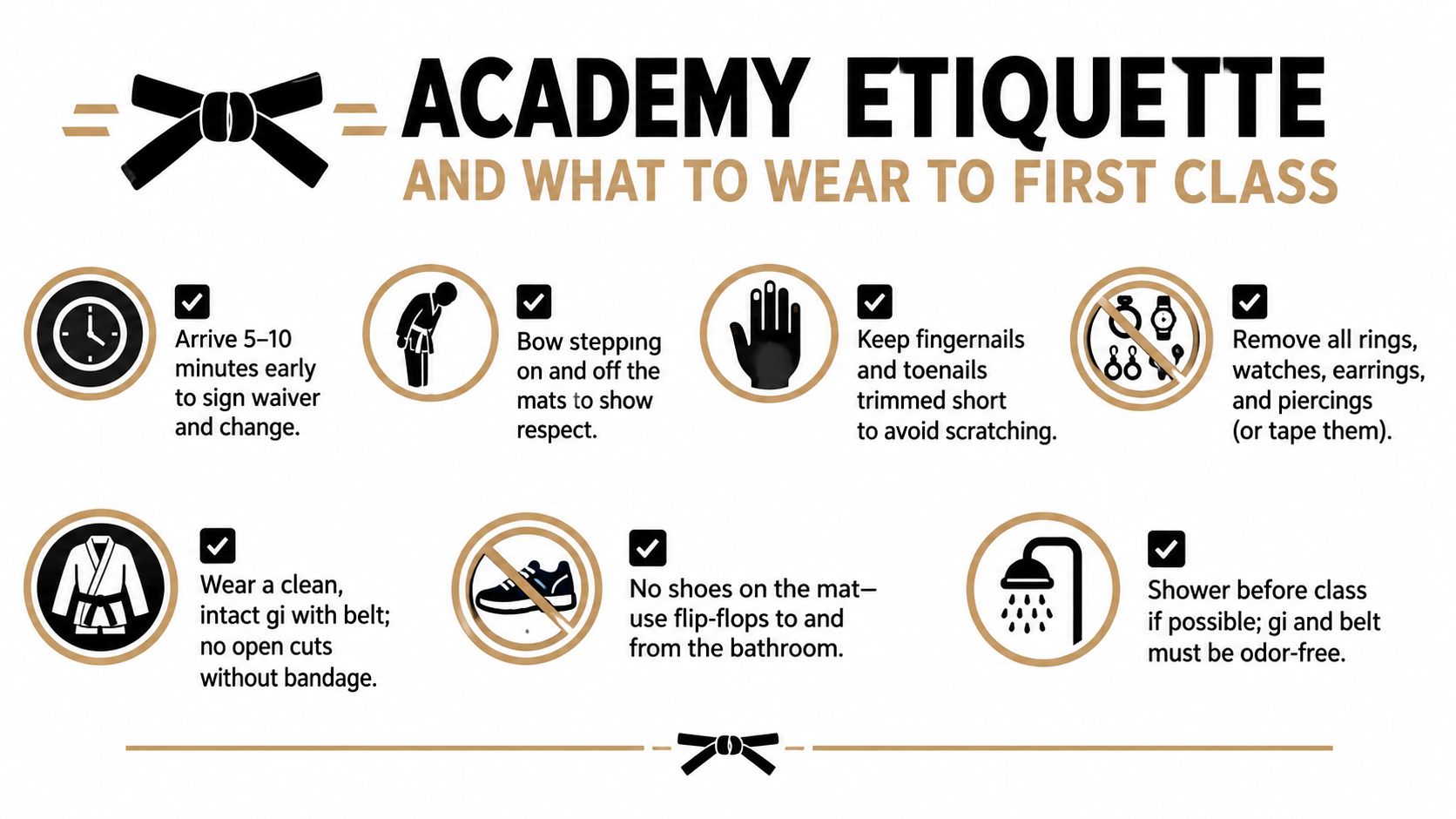
Good uniform habits communicate respect before you perform a single technique. Arrive early enough to change, listen to the coach, and deal with any academy forms without rushing. Keep fingernails and toenails short, remove jewellery and watches, and leave shoes off the mat.
Wear a clean gi with a secure belt, and consider a clean rash guard underneath. Use deodorant, but avoid heavy fragrance that can distract or irritate training partners. Bring a water bottle and flip-flops for walking between the changing area, bathroom, and mat-side space.
At Locals Zetland and Locals Maroubra, beginners can usually borrow a gi for the first class or two, but your own well-fitted white or permitted coloured gi, belt, and mouthguard can make onboarding smoother. Check the academy's current expectations before buying, particularly if you're joining a children's class or planning to attend both gi and no-gi sessions.
Respect shows up in small actions
Bow when stepping onto and leaving the mat if that's part of the academy's practice. Tuck the gi top into the trousers before sitting down, keep your belt tied low and tight, and never use another student's belt as an offensive grip.
The guide to what to wear to your first jiu jitsu class can help you prepare the rest of your clothing and kit. If you have an open cut, cover it properly and tell the coach. If a piercing can't be removed safely, ask how the academy wants it protected.
These habits make training more comfortable for everyone. They also help a new student feel part of the academy community because respect is demonstrated through consistent behaviour, not expensive equipment.
Budgeting and Buying Tips for Sydney Families
A family buying a gi needs a clear priority order. Start with academy requirements, then check fit, fabric, stitching, shrinkage information, exchange terms, and whether the uniform includes a belt. A starter gi should feel comfortable and withstand regular washing. Students training consistently may prefer a mid-range option, while competition-focused athletes might need a particular cut, construction, or weave.
Tier | Typical Use | Best For |
|---|---|---|
Entry level | Introductory and casual training | New students deciding whether gi training suits them |
Mid range | Regular weekly training | Students seeking a practical balance of comfort and durability |
Premium | Competition-focused or specialised training | Athletes prioritising construction, finish, or a specific weave |
This tier guide describes priorities rather than fixed prices, because retailers and specifications vary. For a community academy such as Locals Zetland or Locals Maroubra, a correctly sized, washable gi usually matters more than tournament-level details. Check current IBJJF-style requirements only if you plan to compete. Everyday classes may place greater emphasis on comfort, hygiene, and following the academy's clothing policy.
Overseas orders can add delivery and import costs. Trying on a gi at a martial arts shop near Zetland, Maroubra, or the eastern suburbs can reduce exchange problems, particularly for children or students between sizes. Academy second-hand groups, clearance events, and gift vouchers can also make growing children's equipment easier to manage.
If you plan to add custom patches or embroidery to a gi, understanding how customisation affects garment pricing helps you budget realistically. The T-Shirt Envy pricing explained provides relevant context about material, labour, and order details, although a gi has its own construction requirements.
For a child's first uniform, check that the sleeves and trousers allow safe movement without dragging, and look for reinforced knees and fabric suited to frequent washing. Decorative patches can wait. For an adult beginner, choose the simplest gi that meets the academy's requirements. After live training, you will have a better sense of the fabric weight and cut you prefer.
Locals Jiu Jitsu Zetland offers gi and no-gi training for beginners, adults, and children in a supportive community setting. Bring uniform questions to a coach, try a class, and visit Locals Jiu Jitsu Zetland to arrange your start.
Comments